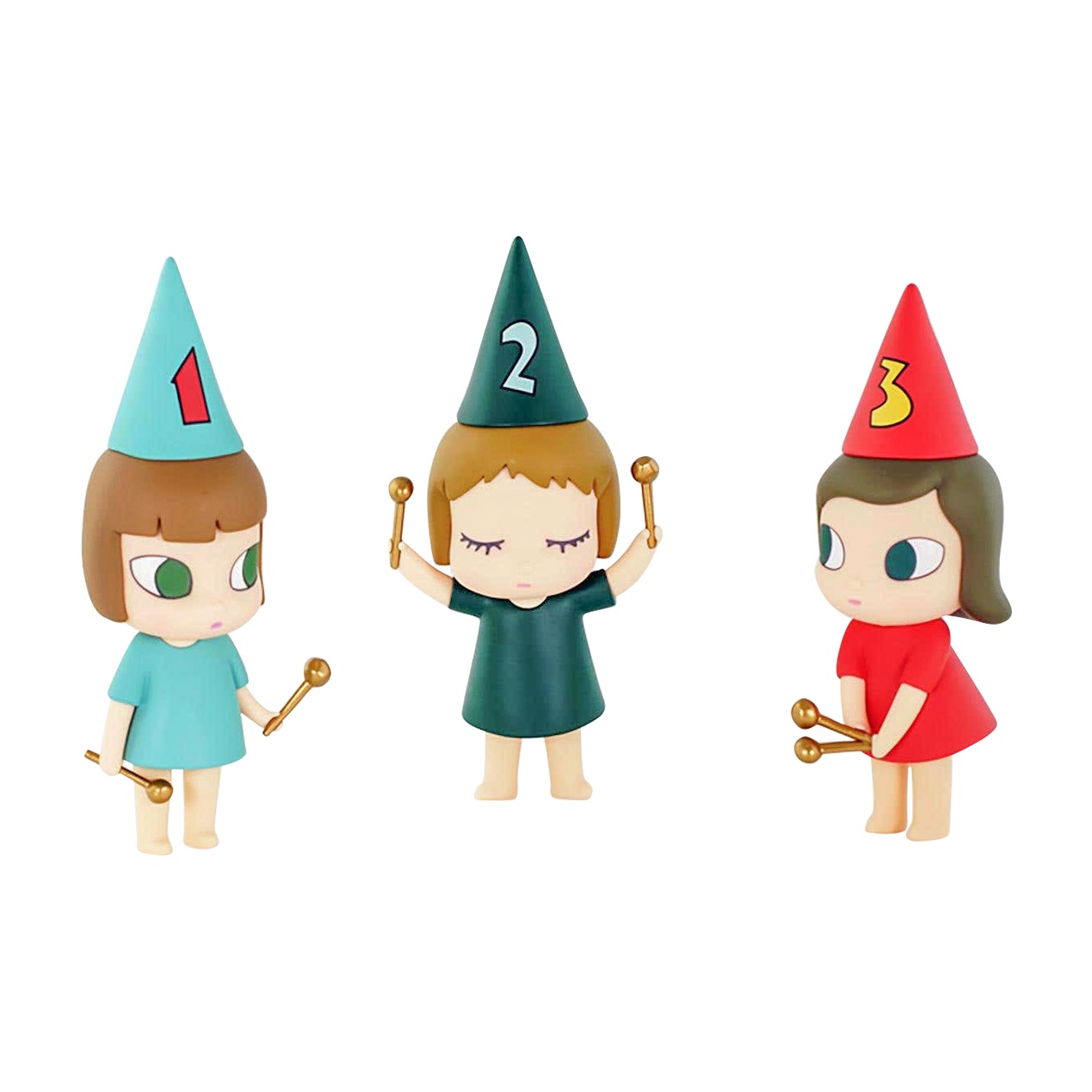
Y Combinator has Requests for Startups - a list of ideas they wish someone would go build. The list works not because the ideas are guaranteed to be good, but because saying a problem out loud makes it feel addressable. Most people carry around a vague sense that something is worth doing and never name it, and so it never gets done. In the same vein, here's my current working list of research topics people should seriously consider, seriously:
Sugar and happiness. Does sugar make us happier, and how long does the high last? There's surely real research on this, but I want granularity - bakery by bakery, café by café, boba shop by boba shop. Someone has to find the happiest croissant in the city, and it should be peer-reviewed.
Dogs you don't own. Correlate happiness with the number of dogs you pass on the street, not the ones you own. (Because we all know that owning a dog is guaranteed happiness, so it's pointless to conduct further research on that front.)
The marginal dog. At what number of dogs does owning one stop making you happier? 2 or 12?
The entropy of a room. Measure how much extroverts move and mix versus introverts. Thermodynamics, for parties.
The sex appeal of intellectualism. Follow Substack writers around and measure their game against equally good-looking non-writers. Take readings at 1 day, 1 month, and 10 years.
Prediction for ghosting. Someone please benchmark what predicts a post-first-date ghost.
Consumption of LOTR videos after 1am. An analysis of the demographics. You know who you are.
Escaping the permanent underclass. Just one word: how?
The tech discourse oscillates between "we are so back" and "we are so cooked" with the regularity of a metronome. We're living through Amara's law in real-time - that tendency to overestimate technology's impact in the short run while underestimating it in the long run - except now the cycles are measured in Twitter threads rather than decades. The irony is that both the doomers and the accelerationists might be right, just on different timescales. We're simultaneously experiencing the most significant technological shift since the internet and watching VCs fund the same AI ideas over and over again.
The current AI gold rush feels eerily similar to 1999, but instead of putting ".com" after everything, we're slapping "AI-powered" on products that are essentially if-then statements with better marketing. San Francisco billboards promise "revolutionary AI solutions" for problems that a competent Excel macro could solve. YouTube serves me ads for AI apps that will "10x my productivity" by helping me write emails I could have typed faster than explaining what I want to the bot. The surface-level thinking is staggering. We're using frontier models to generate LinkedIn posts about thought leadership while the actual innovators are quietly building infrastructure we won't understand the importance of for another five years. It's entirely possible we'll look back at this period the way we look at Pets.com, wondering how anyone thought delivering dog food at a loss was revolutionary just because you ordered it online.
Is rage-baiting the new GTM motion? Is attention at all costs the new paradigm for founders? The slop is everywhere. Every day brings fresh "ChatGPT DESTROYS [insert profession]" content, and our social media feeds are morphing into a frankenstein of AI slop machine. We've democratized the ability to produce mediocre content at scale, and yet the content inspires so little. Maybe that's the real unlock here: we've finally built the machine that produces exactly the kind of content the algorithm wanted all along - infinite, forgettable, and just engaging enough to keep us scrolling.
Everyone thinks they're disciplined. Ask around - you'll be hard-pressed to find someone who admits to being undisciplined. It's like asking people if they're good drivers. The belief itself is so universal it should make us suspicious. Having strong opinions about how things should be done isn't discipline. Neither is knowing what the right thing to do is. I've met founders who are very intelligent and great people, and yet poor at execution. The gap between knowing and doing is where discipline lives, and most people don't even realize there's a gap. They think understanding the path is the same as walking the path.
Here's what discipline actually is: doing things you don't want to do, repeatedly, when no one is watching. Many founders, myself included, have an innate inclination towards certain tasks - e.g. designing in Figma, coding, reading substack etc. Those tasks can be helpful for building startups, but they are not really about discipline. Real discipline is answering customer emails when you'd rather be building features. It's reviewing boring but critical metrics every morning. It's having difficult conversations with team members instead of hoping things improve. The Japanese have this figured out - their culture doesn't celebrate discipline; it assumes it. In Chinese, the word 忍 (to endure), literally means a knife on your heart - a perfect picture of how it feels when you force yourself to stay disciplined.
Self-discipline compounds, but it also decays. This is what makes it particularly crucial for startup founders. The whole mythology around startups celebrates doing hard things - "do things that don't scale," we tell ourselves. But doing one hard thing isn't the point. It's doing it again tomorrow, and the next day, when the novelty has worn off and things aren't always working and the path feels uncertain. Perhaps discipline is the highest expression of self-belief. By overcoming your own impulses, you rise into the person you believe you can be.
I don't eat strawberries. This puts me in the awkward position of explaining daifuku's aesthetic perfection while never having experienced it myself.
But maybe that's the point - some things are beautiful enough that they transcend their function. If you're not too sure what a daifuku is, here's the ChatGPT-style description of this confectionery masterpiece: the ichigo daifuku sits there like a piece of minimalist sculpture, white mochi stretched thin enough to hint at the red beneath, a kind of edible Rothko where color fields blur into each other. And here's Joanne's description: someone decided to put a strawberry and some red bean paste in the middle of a mochi ball, and called it a daifuku.
Having been to Japan a few times, daifuku has come to remind me of spring and everything associated with it: the spring festivals, the cute red-on-white color combo, vendors shaping each piece with quiet pride, and kids running around in the alleyways.
And maybe in its essence, the Japanese figured out something that Western pastry chefs never quite grasped: sometimes the most elegant solution is also the simplest. The best user experience is the one that doesn't try to do too much.
1
About Me
Building. Studied computer science and finance. Did stuff like investment banking and growth equity. Also wrote and sold songs. Singaporean based in the US. I think samoyeds are cool.
Why do I go to museums?
Why do I walk through the white alabaster cloisters
In the echoes of my own footsteps
Waltzing in evanescence
As I stroll from frame to frame
I do not like half of the art I see
Even on a good day
I do not understand most of the art I see
Its profoundness eludes me
Although for the ones I do
There is an unspoken understanding
All the most beautiful portraits
All the most stunning landscapes
All that I can imagine
Yet why do I go to museums?
Is it to breathe a different air
And live in a different time
Study the tiny cracks in the aegean wainscot
Slats of whiskey bourbon light
Pouring into a different windowpane
How it glistens in your eyes
Come, stand next to me,
For just a faint moment
In this disorientating, disquieting space
Between these garden walls
It is delightful to erase myself
And exist with you
What am I doing –
I wonder to myself
Burying my smile in my sweater
Breathing the faint scent of spring spruce
Absent-mindedly wishing that I am soaking in you
Feigning indifference
When it makes all the difference and more
Wouldn’t it be nice if you played music
In my lap
And I kiss your ears
Planting lilies and carnations
Sometimes
It is kind of nice
To sit in a box
And write
Morosely
With a brooding frown
And looming dread
To write about strange love
Roaming hearts
Anticipation
The air in here
Stays the same temperature
It is kind of nice
To sit in a box
And not be reminded of
The humming world